Ready to Revolutionize Your Business?
Get a detailed demo of Udyog ERP's capabilities
Get a detailed demo of Udyog ERP's capabilities

Proven ERP Solutions Trusted by 2,000+ Industry Leaders




As businesses grow, standard ERP systems often struggle to keep up with operational complexity.
You may start noticing::
» These are indicators that your systems are not fully aligned with your business processes
Get a Free Demo

Custom ERP is not required for every business but it becomes important when:
» In such cases, a custom ERP system helps bring structure, visibility, and control to your operations
To address these operational challenges, your ERP system must be designed with the right structure, integrations, and workflows.
Get a Free DemoOur custom ERP development services are structured to cover the complete lifecycle from planning and system design to implementation, integration, and long-term support.

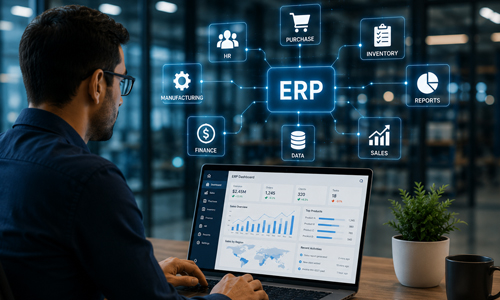

Develop only what your business needs:
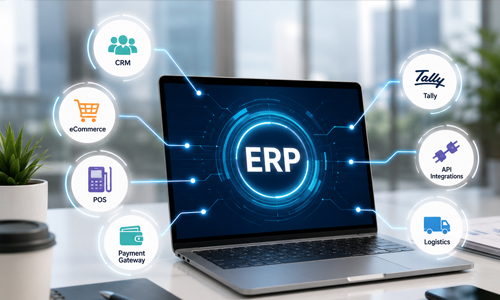
We ensure your ERP works as a connected system-not in isolation.

We ensure smooth ERP implementation from setup to deployment with minimal disruption.
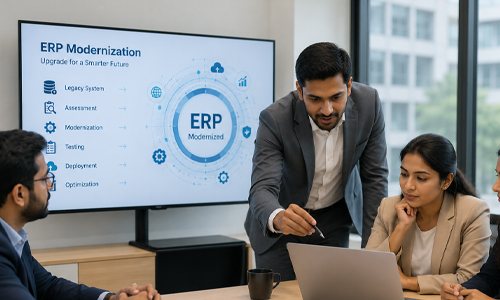
Upgrade outdated systems without disrupting operations:

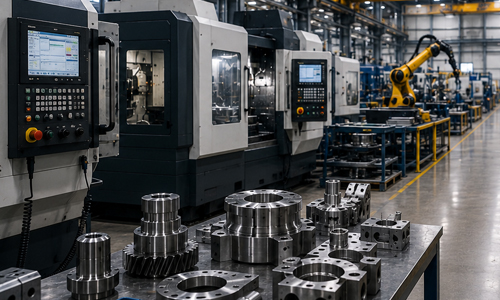
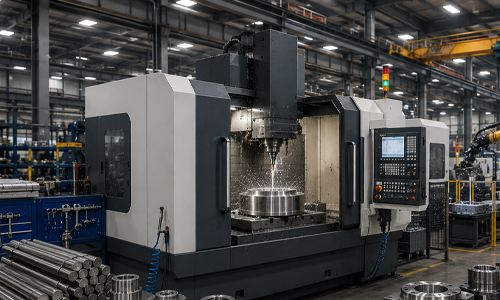
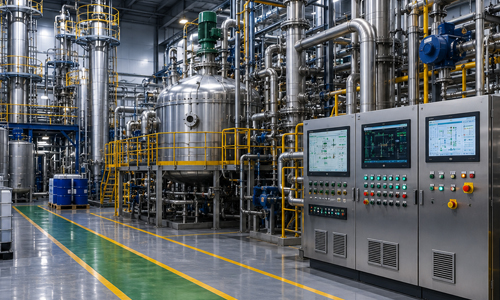
We understand real production environments
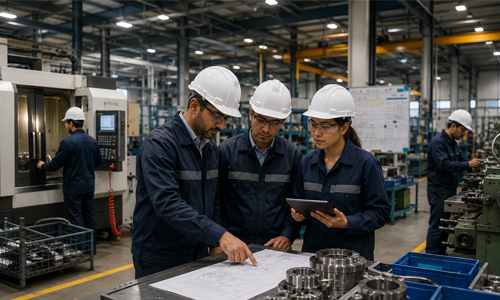
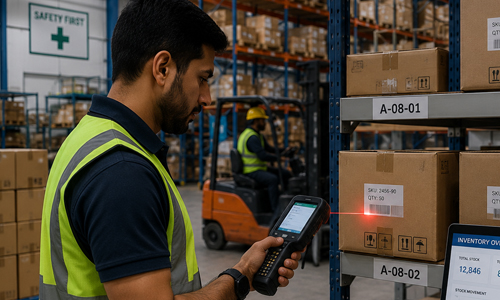
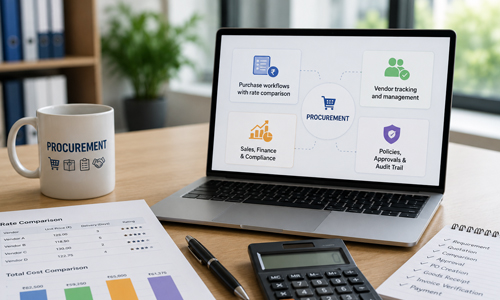
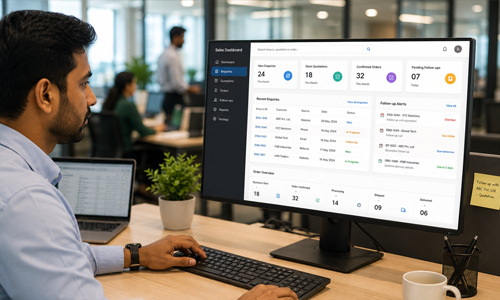
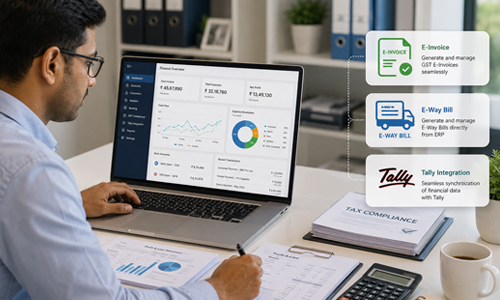

We specialize in ERP systems for process-driven and manufacturing-intensive industries, where operational control, traceability, and system integration are critical.

Choosing the right ERP partner is not just about development capability-it's about how well the system reflects your actual business operations and how effectively it is implemented.
ERP aligned with actual operations
Better data consistency across departments
Reduced dependency on manual processesol

Systems that can scale as your business grows
Custom ERP software is an enterprise system designed specifically around your business processes, workflows, and operational requirements, rather than using predefined structures found in standard ERP systems.
It allows you to manage functions like production, inventory, sales, finance, and compliance in a way that aligns with how your business actually operates.
Standard ERP systems are built for general business use and follow predefined workflows. They work well for businesses with simple or standardized operations.
Custom ERP systems are designed to match specific business processes, making them more suitable for companies with complex workflows, manufacturing operations, or integration requirements.
A business should consider custom ERP when:
In such cases, a custom ERP system provides better control and alignment with operations.
The timeline depends on the scope, number of modules, and complexity of the business processes.
Typically:
A structured approach helps ensure smooth deployment and minimal disruption.
The cost of ERP development depends on:
A well-planned ERP system is designed to deliver long-term operational value.
Yes. Custom ERP systems are designed to integrate with existing business tools and platforms.
This includes:
This ensures seamless data flow across the organization.
Yes, custom ERP is particularly suitable for manufacturing and process-driven industries where operations involve:
Custom ERP helps align these processes within a single system.
ERP systems improve operations by:
ERP implementation typically includes:
A structured implementation approach ensures smoother adoption.
Yes, ERP systems can be configured to support:
This helps reduce manual work and improves compliance accuracy.
Not all businesses need custom ERP.
However, it becomes relevant when:
Custom ERP can help streamline operations and support growth.